Eileen Hernon
Behavior Management
I consider behavior management to be the most important aspect of my teaching career. The content I'm teaching doesn't matter much if my classroom is in chaos. I believe classroom management rests on three main tenets: positive relationships, clear expectations, and logical consequences. I've detailed each of the tenets below.

Positive Relationships
I've found that having a strong relationship with my students makes a world of difference in their behavior. I don't think it's fair to expect students to follow my directions if they don't trust me or feel some sense of connection with me. Once I have established a trusting connection with my students, they are much more likely to listen and behave in a positive way. When I first began student-teaching, my goal was to have at least one individual conversation with each student by the end of the first week. Establishing that relationship before there were any behavior issues made it much easier to address behavioral concerns later on, because the students knew that I cared about them.
Clear Expectations
We would never assume a student could read without being taught, so it isn't fair to assume they know how to behave if we don't explicitly establish and model behavioral expectations and procedures either. Additionally, I believe it's important that students play a role in establishing expectations, so that they understand why it's important to have rules and procedures.
While student-teaching, I worked with the children to establish classroom rules over the course of three days. First, I had the kids list off anything and everything they thought should be a class rule. The next day, we tried to find common themes among the suggested rules and group them into categories. Finally, we condensed the second day's rules into a list of three easy-to-remember rules: be safe, be responsible, be respectful. Afterward, I had the students complete a graphic organizer for which they had to pick one rule and provide an example of what it looks like and sounds like to follow that rule.


Logical Consequences
It is important that students learn that all behavior has resulting consequences. Positive behavior often results in a positive consequence (e.g. being kind to others results in having happier friendships), and negative behavior results in a negative consequence (e.g. mistreating classroom materials results in that material being taken away or broken). I prefer logical consequences to rewards or punishments, because they are tailored to match specific behaviors and they intrinsically motivate students to behave positively. Additionally, logical consequences are not tied to feelings of guilt or shame the same way some punishments are.
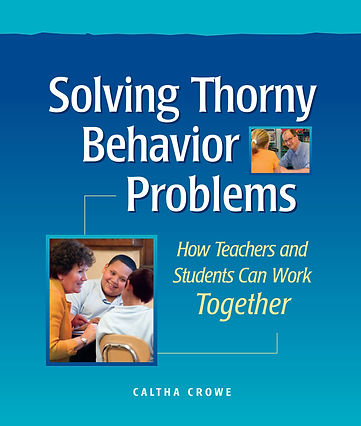
The book Solving Thorny Behavior Problems by Caltha Crowe helped me better understand logical consequences. I referenced it many times while student-teaching.